

Robotic Spine Surgery in Naples, FL
Advanced Guidance for Selected Spine Procedures
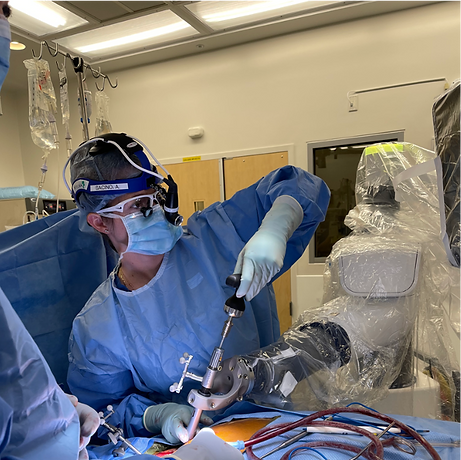
Apex Brain & Spine offers robotic-assisted spine surgery using the Globus ExcelsiusGPS system when clinically appropriate. Robotic navigation technology helps the surgical team plan and guide selected portions of a spine procedure using detailed images of your individual anatomy.
Robotic technology does not replace the neurosurgeon. It is one tool used to support surgical planning and the precise placement of spinal instrumentation, such as screws and rods, during selected procedures.
How Robotic Spine Surgery Works
Before and during surgery, imaging of the spine is used to create a plan based on your anatomy. The ExcelsiusGPS robotic navigation platform provides guidance to help the surgeon determine the appropriate size, path, and placement of instrumentation.
During the procedure, the surgeon uses the technology and real-time navigation information to perform the planned surgical steps. The neurosurgeon remains responsible for every clinical decision and all aspects of the procedure.
When Robotic Navigation May Be Used
Robotic navigation may be considered for selected spine procedures that require instrumentation, stabilization, or detailed surgical planning. Whether it is used depends on the procedure, the levels of the spine involved, your anatomy, imaging findings, diagnosis, and the neurosurgeon’s clinical judgment.
Robotic assistance may be used in selected cases involving:
-
Spinal fusion surgery
-
Spinal instability
-
Spondylolisthesis
-
Degenerative spine conditions
-
Spinal deformity
-
Revision spine surgery
-
Spinal tumors or metastatic disease
-
Procedures requiring screw and rod fixation
Not every patient needs robotic navigation, and not every spine procedure requires instrumentation. Your surgical plan is based on the treatment that is medically appropriate for your specific condition.
Personalized Surgical Planning
Robotic technology is one part of a personalized spine-surgery plan. Before recommending surgery, we review:
-
Your symptoms and neurologic examination
-
-
MRI, CT, X-ray, or other relevant imaging
-
The cause of nerve compression, instability, or deformity
-
The number and location of spinal levels involved
-
Prior treatment or previous spine surgery
-
The need for decompression, stabilization, or fusion
-
The potential benefits, risks, alternatives, and expected goals of treatment
For some patients, a minimally invasive, robotic-assisted approach may be appropriate. For others, a different surgical approach may better address the condition.
Fellowship-Trained Robotic Spine Expertise
Amanda Sacino, MD, PhD is a fellowship-trained neurosurgeon with specialized training in degenerative spine conditions, minimally invasive spine surgery, robotic spine surgery, and spine oncology.
Dr. Sacino completed fellowship training in robotic and minimally invasive spine surgery at Johns Hopkins Hospital and Sibley Memorial Hospital. She also completed complex and minimally invasive spine fellowship training at the Swedish Neuroscience Institute. Her experience includes intraoperative navigation, augmented reality, robotic technology, and advanced surgical planning for complex spine conditions.
At Apex Brain & Spine, robotic technology is used when it supports the goals of a carefully planned procedure. Our focus remains on selecting the right treatment and approach for each patient.
Preparing for Surgery
If robotic-assisted spine surgery is recommended, your neurosurgeon will explain the proposed procedure, the role of the technology, expected treatment goals, possible risks, activity restrictions, follow-up needs, and recovery considerations specific to your situation.
Helpful Resources:
Request a Robotic Spine Surgery Consultation
If you have been diagnosed with spinal instability, spondylolisthesis, degenerative spine disease, a spinal tumor, or another condition that may require spine surgery, Apex Brain & Spine can help you understand whether robotic navigation may be appropriate as part of your treatment plan.