

Treatments We Offer in Naples, FL
Personalized Neurosurgical & Spine Treatment Options
At Apex Brain & Spine, treatment recommendations are based on your diagnosis, symptoms, neurologic examination, medical history, imaging findings, and personal goals. Not every condition requires surgery. When a procedure is appropriate, our board-certified, fellowship-trained neurosurgeons use advanced and minimally invasive approaches when clinically appropriate.
We treat patients in Naples and Southwest Florida and work to provide clear explanations, detailed imaging review, and individualized planning at every stage of care.
Call 911 or seek emergency care immediately if you are experiencing sudden or severe symptoms including signs of stroke, a seizure, sudden severe headache, loss of consciousness, severe head injury, new weakness, difficulty speaking, or another medical emergency.
Minimally Invasive Spine Surgery
Minimally invasive spine surgery uses specialized techniques and smaller incisions when clinically appropriate to treat selected spine conditions. The goal is to address the source of nerve compression, instability, fracture-related pain, or another spinal problem while limiting disruption to surrounding muscle and tissue.
Apex Brain & Spine may consider minimally invasive surgical approaches for selected patients with herniated discs, spinal stenosis, spondylolisthesis, compression fractures, spinal tumors, and other spinal conditions.
Minimally Invasive Laminectomy
A minimally invasive laminectomy may be considered when spinal narrowing is placing pressure on nerves. This can occur with spinal stenosis, selected herniated-disc cases, or spondylolisthesis.
The procedure removes the portion of bone or ligament contributing to nerve compression through a small incision, often approximately 1 to 2 inches. The goal is to relieve pressure on the affected nerves and improve symptoms such as radiating arm or leg pain, numbness, weakness, or walking difficulty when the clinical findings support surgery.
Microdiscectomy for Herniated Disc
Microdiscectomy may be considered for selected patients with a herniated disc pressing on a spinal nerve. During the procedure, the surgeon removes the portion of disc responsible for nerve compression through a small incision.
The goal is to reduce nerve pressure and improve symptoms such as radiating pain, numbness, tingling, or weakness when non-surgical treatment has not provided sufficient relief or when surgery is otherwise medically appropriate.
Robotic Spinal Fusion Surgery
Spinal fusion is a surgical procedure used to stabilize the spine by joining two or more vertebrae. It may be considered when abnormal movement or instability contributes to back pain, nerve symptoms, deformity, or other problems involving the spinal column.
For selected patients, fusion may be recommended for spondylolisthesis, advanced degenerative changes, spinal instability, deformity, recurrent disc-related problems, or other diagnoses identified through clinical evaluation and imaging.
During fusion surgery, the damaged disc may be removed and an interbody spacer, or cage, with bone graft may be placed to support fusion as the spine heals. Instrumentation such as screws and rods may be used to help maintain alignment and stability during the fusion process.
PLIF: Posterior Lumbar Interbody Fusion
Posterior lumbar interbody fusion, or PLIF, is performed through the back of the spine. It may be considered when a patient needs both nerve decompression and spinal stabilization.
During a PLIF procedure, the damaged disc is removed and an interbody spacer with bone graft may be placed to support fusion. Instrumentation may be used to maintain alignment and stability as the fusion matures.
ALIF: Anterior Lumbar Interbody Fusion
Anterior lumbar interbody fusion, or ALIF, is a fusion approach performed through the front of the abdomen. It may be considered for selected patients depending on the affected spinal level, anatomy, diagnosis, symptoms, alignment goals, and need for stability.
The best fusion approach is individualized. Your neurosurgeon will discuss whether an anterior, posterior, minimally invasive, or other approach may be appropriate for your situation.
Kyphoplasty for Compression Fractures
Kyphoplasty is a minimally invasive procedure that may be considered for selected patients with painful vertebral compression fractures. These fractures can occur after trauma, osteoporosis, spinal tumors, or other conditions that weaken bone.
During kyphoplasty, the goal is to stabilize the affected vertebra and help reduce fracture-related pain. Your neurosurgeon will review your symptoms, imaging, fracture characteristics, overall health, and treatment goals to determine whether the procedure may be appropriate.
Robotic Spine Surgery
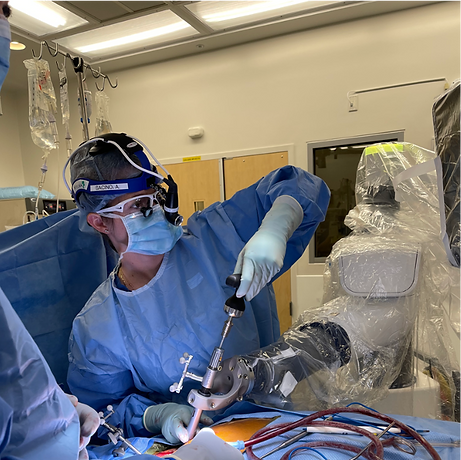
Apex Brain & Spine offers robotic-assisted spine surgery using the Globus ExcelsiusGPS system when clinically appropriate. Robotic and navigation technology may be used to support surgical planning and the precise placement of spinal instrumentation for selected procedures.
Robotic technology is one part of a personalized surgical plan. Whether it is used depends on the procedure, diagnosis, anatomy, treatment goals, and the neurosurgeon’s clinical judgment.
Dr. Sacino completed fellowship training in robotic and minimally invasive spine surgery at Johns Hopkins Hospital and Sibley Memorial Hospital and has experience with intraoperative navigation, augmented reality, and robotic technology for complex spine care.
Spinal Cord Stimulator Removal
A spinal cord stimulator may be evaluated for removal or revision when it no longer provides meaningful relief, causes discomfort or device-related concerns, interferes with other care, or is no longer appropriate for a patient’s treatment plan.
We review your symptoms, device history, imaging, and available records to determine whether device removal, revision, or another treatment approach may be appropriate. The specific plan depends on the type of system, location of the implanted components, prior procedures, scar tissue, and the reason removal is being considered.
Spine Tumor Surgery & Spinal Oncology
Apex Brain & Spine evaluates and treats primary spinal tumors and spinal metastases. Treatment planning is individualized and may involve surgery, nerve decompression, spinal stabilization, image-guided navigation, robotic technology when clinically appropriate, radiation-oncology coordination, or other specialized care.
The recommended approach depends on the tumor type, location, effect on the spinal cord or nerves, spinal stability, symptoms, imaging findings, and overall cancer-treatment plan.
For patients who need multidisciplinary cancer care, our neurosurgeons coordinate with radiation oncology and other specialists when appropriate.
Your Treatment Plan Is Individualized
No procedure is right for every patient. Before recommending treatment, our team reviews the cause of symptoms, relevant imaging, prior care, neurologic findings, health history, and personal goals.
When surgery is considered, your neurosurgeon will explain:
● Why a procedure may be appropriate
● The potential benefits, risks, and alternatives
● What the treatment is intended to address
● What to expect before and after the procedure
● Whether minimally invasive, robotic, or another approach may be appropriate
Preparing for Surgery
If surgery or a procedure is recommended, these resources can help you prepare for the next stage of care.
Helpful Resources:
Insurance & Appointments
Apex Brain & Spine accepts most major health insurance plans, including Medicare. Patients with HMO or EPO plans generally need a referral from their primary-care provider; other patients may call directly to schedule an appointment.
Request a Consultation
If you have been diagnosed with a brain or spine condition, are experiencing persistent symptoms, or have been advised to seek a neurosurgical opinion, Apex Brain & Spine can help you understand your options.